
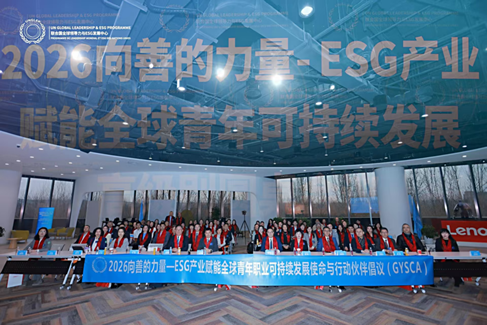
BEIJING, January 30, 2026 — Beijing’sLenovo Future Center hosted a high-level roundtable, “Power for Good – ESGIndustry Empowerment for Global Youth Sustainable Development.” Co-convened byUNGLEP and Lenovo Group, the event brought together participants from theUnited Nations ecosystem, multilateral financial institutions, multinationalcompanies and academic institutions to discuss how global industry can betterprepare the next generation for sustainable development.
From Fragmented Efforts to Systemic Design: Building the “AGETalent” Framework
In his opening address,Dr. Xiang Luo, Chairman of the Steering Committee of UNGLEP, introduced the“AGE Talent” framework – an integrated model designed to prepare the nextgeneration of leaders for the convergence of Artificial intelligence,Globalization, and Environmental, Social, and Governance imperatives. He stressedthat the core challenge is not a shortage of resources, but fragmented actionsand dispersed accountability. “Sustainable development is reshaping thefundamental logic of long‑term corporate existence. Whether this transformationsucceeds depends on ESG principles being internalized into business mechanismsand becoming the foundational mindset and code of conduct for youngprofessionals,” he said.
Representatives from Airbus, Panasonic, Lenovo Group, BMW China,Towngas, Holcim, Walmart China, Accenture China, Maersk, CMA CGM China, AntGroup, Shein, Haier Smart Home, Haier Biomedical, Goldwind Science &Technology, Goertek, Xiaomi Group, BrainCo, Eswin Materials, Eswin Computing,the World Bank, Asian Infrastructure Investment Bank (AIIB), ChinaInternational Capital Corporation (CICC), World Business Council forSustainable Development (WBCSD), World Wide Fund for Nature (WWF), multilateralfinancial institutions, and other leading think tanks engaged in in-depthdiscussions on “AI + ESG Strategy,” human resources innovation, and mechanismsfor cultivating sustainable youth talent.
Insights from Industry and Institutional Leaders
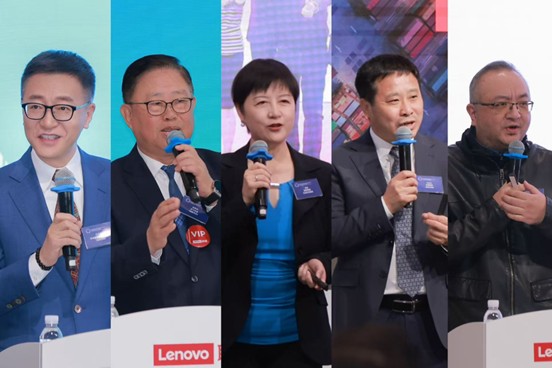
Ms. Lan Gao, Senior Vice President of Human Resources (HR) ofLenovo Group, drew on Lenovo’s global operations to explain how companies candeeply integrate youth development with corporate ESG strategy throughinternational rotations, project‑based training, and innovative organizationalcapacity‑building.
Dr. Ke Fang, Director General of the Portfolio ManagementDepartment at AIIB, said green finance and innovative investment can supportyouth participation in sustainable development projects.
Mr. Bingdi Zhao, President of Panasonic Corporation of China,explored pathways for integrating digital technology with ESG, detailing howyoung people can leverage AI to engage in green‑transition practices.
Professor Yu Zhou, Director of the Organization and HumanResources Department at Renmin University of China, said the co-evolution of HRsystems and artificial intelligence is reshaping sustainable career developmentfor young people.
Mr. Huiwen Wang, Vice President and Chief Quality Officer ofLenovo Group, introduced Lenovo’s ESG Navigator (“Le Xun”) platform, which usesdigital tools to address ESG management challenges such as data silos and lowcollaboration efficiency, enabling data-driven decision-making and closed-loopmanagement across the value chain.
High‑Level Dialogue on Systemic Empowerment in the Digital Era
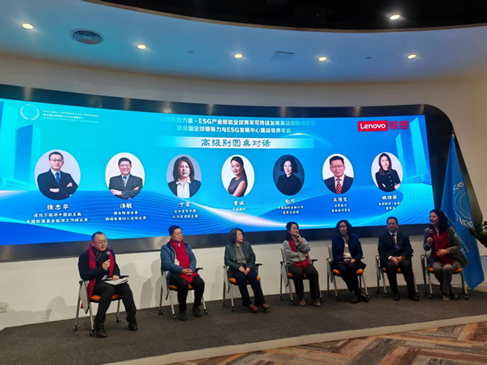
A high‑level roundtable, moderated by Dr. Zhonghua Xu, VicePresident of TotalEnergies Asia, focused on how industries can systematicallyempower youth talent for sustainable development in the digital economy.Panelists included Dr. Min Tang, former Counselor of the State Council; Ms. FeiNing, Vice President of Human Resources at Airbus China; Ms. Cheng Zeng,Rotating CEO of Career International; Mr. Dewen Wang, Senior Economist at theWorld Bank; Ms. Ke Zhao, Managing Director at CICC; and Ms. Jinli Yao, Chairmanof Meijin Energy (Hydrogen). The dialogue examined youth’s role in supportinglong‑term corporate ESG transformation from multiple angles: industrialcollaboration, financial support, organizational innovation, and talent‑developmentmodels.
Launch of the GYSCA Program
Ms. Chunxing Wang,Director of Strategic Development at UNGLEP, officially unveiled the“Multinational Corporation ESG Global Youth Sustainable Career AdvancementProgram (GYSCA).” The program was presented as a practical implementationpathway for the “AGE Talent” framework, integrating AI-oriented capabilities,global exposure and ESG-driven practice into a single, structured talentdevelopment system. Structured around a “UN knowledge platform + corporatesenior mentorship + practical‑training ecosystem” model, GYSCA comprises fourpillars: specialized industry certification, internships and hands‑on trainingat leading enterprises, a global mentor network, and cross‑cultural global‑perspectivedevelopment. The program aims to build a systematic pathway for young peopleentering the workforce while bridgingthe gap between education, industry practice, and international platforms andembedding ESG thinking into professional development.
Activating a Cross‑Sector Ecosystem
During the conference, UNGLEP presented certificates designatingLenovo Group, Airbus, Panasonic, Goldwind Science & Technology, BrainCo,Haier Biomedical, Haier Smart Home, Eswin Materials, Eswin Computing, Towngasand Career International as “Strategic Partners for Multinational CorporationESG Global Youth Career Sustainable Development.” This marks the officiallaunch of a global internship and practical‑training system open to youthworldwide.
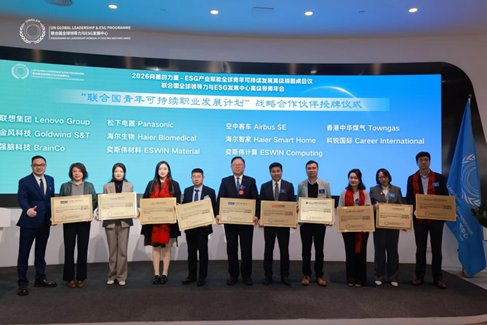
The event also included a certification ceremony for UNGLEPSenior Mentors. Leaders and experts from finance, manufacturing, technology,energy, healthcare, consulting, and other fields joined the GYSCA mentorecosystem. This network fosters cross‑industry, cross‑cultural, and cross‑generationalknowledge exchange and practical collaboration, offering sustained, systematicsupport for youth development through career planning, project co‑creation, andinternational exchange.
Power for Good, Action for Impact
Participants agreedthat cultivating “AGE Talent” — talent equipped to navigate AI transformation,embrace Global integration, and lead ESG-driven sustainability — is essentialto building long-term competitiveness, fostering resilient growth, anddelivering on the 2030 Sustainable Development Agenda.
UNGLEP will continue to deepen industrial collaboration,resource‑sharing, and joint action with global partners to shape a moreinclusive, resilient, and forward‑looking youth‑talent ecosystem — deliveringactionable, systemic solutions for achieving the 2030 Sustainable DevelopmentGoals.